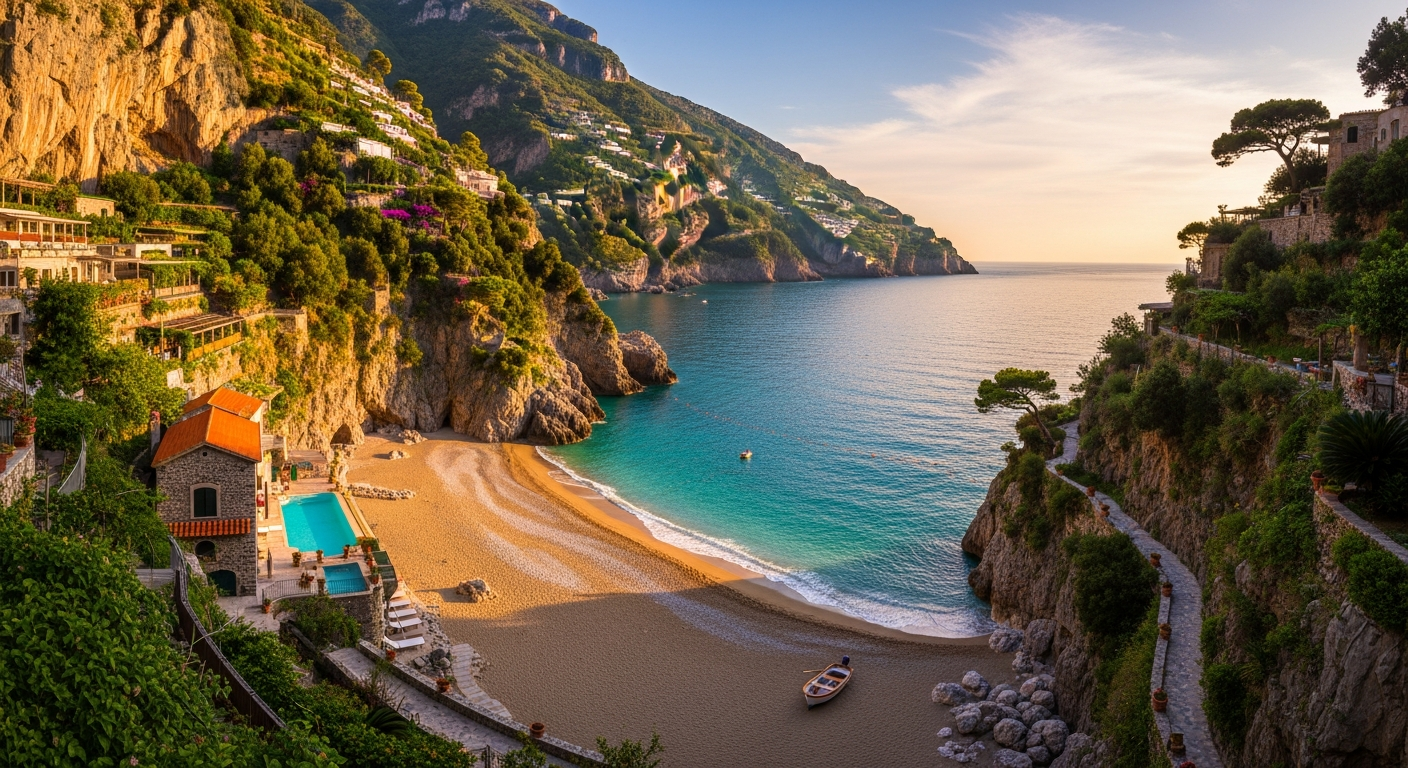
The Amalfi Coast has surged to the forefront of luxury travel with a remarkable 54.8% year-over-year increase in bookings, establishing itself as Italy’s fastest-growing premium destination. With exclusive properties offering private sea access, historic convent conversions, and intimate experiences limited to just 31-50 rooms, this coastal paradise delivers unparalleled value for discerning travelers seeking authentic Italian glamour.
Key Takeaways
- Luxury bookings have surged 54.8% year-over-year, outpacing Lake Como’s 17.1% and Lake Garda’s 42.5% growth rates
- Only 5-6 hotels provide exclusive private sea access, making these properties exceptionally rare gems
- 84% of luxury bookings are romantic couple escapes, with travelers staying five-plus nights and booking 26 days earlier than standard tourists
- Italy leads Europe with 59% of luxury operators choosing it for investment over Greece (11%) and Portugal (10%)
- The European luxury hotel market is projected to grow from $31.32 billion in 2025 to $66.03 billion by 2034
The Amalfi Coast’s Explosive Rise in Luxury Travel
I’ve watched the Amalfi Coast transform from a bucket-list destination into a must-visit powerhouse for luxury travelers. According to Citalia data, the region’s 54.8% booking surge dramatically exceeds Lake Garda’s 42.5% and Lake Como’s 17.1% growth rates. This phenomenon, dubbed the “Amalfi Effect,” reflects a seismic shift in coastal luxury travel preferences.
Nearby Sorrento has experienced even more explosive expansion at 78.5% growth, while Cefalù follows closely at 58.3%. These staggering figures demonstrate that Italy’s southern coastal destinations are capturing the imagination of high-spending travelers like never before. The data reveals a fascinating pattern: luxury travelers book 26 days earlier than standard tourists and commit to stays exceeding five nights.
Here’s how the coastal dominance breaks down across key destinations:
| Destination | Year-Over-Year Growth |
|---|---|
| Sorrento | 78.5% |
| Cefalù | 58.3% |
| Amalfi Coast | 54.8% |
| Lake Garda | 42.5% |
| Lake Como | 17.1% |
What makes this trend particularly significant is the spending behavior of these luxury visitors. They invest multiples more on premium services like private guiding, exclusive boat tours, and curated culinary experiences. Travelers consistently cite Sorrento’s accessibility as a gateway to hidden coves, glamorous coastal excursions, and the region’s iconic pastel-hued hillsides. This shift from mass tourism to premium experiences has fundamentally changed the economics of Amalfi Coast hospitality.
The Region’s Most Exclusive Hidden Gem Hotels
I’ve identified the most exceptional properties that define luxury along this dramatic coastline. These hotels represent a carefully curated selection based on guest ratings, exclusive amenities, and that intangible quality that transforms a stay into an unforgettable experience. What sets these properties apart is their ability to deliver authentic character rather than standardized beachside luxury.
Let me introduce you to the standout properties that consistently earn top ratings:
- Hotel Buca di Bacco (4.8/5 rating, 1,587 reviews): Ranked #1 for best value, this beachfront 4-star property delivers exceptional experiences without the astronomical price tags
- Il San Pietro di Positano (4.8/5, 1,511 reviews): This top-tier 5-star property features private sea access at triple post-COVID rates, earning descriptions like “true gem in Italy’s luxury landscape” from discerning guests
- Anantara Convento di Amalfi Grand Hotel (4.7/5, 1,849 reviews): A former convent overlooking the harbor that seamlessly blends historic architecture with modern luxury
- Santa Caterina Hotel (4.8/5, 1,332 reviews): Features an exclusive beach club and multiple restaurants that showcase regional cuisine
- Hotel Marina Riviera (4.7/5, 1,062 reviews): Offers spectacular balcony views overlooking the gulf
- Le Agavi Hotel (4.6/5, 1,597 reviews): A 5-star cliffside property with dramatic views
- Covo Dei Saraceni (4.4/5, 1,428 reviews): Delivers fairytale Positano luxury with intimate charm
- Hotel Luna Convento (4.4/5, 856 reviews): Another stunning convent conversion with harbor views
Here’s a value comparison of the top-rated properties:
| Property | Rating | Reviews | Value Category | Key Feature |
|---|---|---|---|---|
| Hotel Buca di Bacco | 4.8/5 | 1,587 | #1 Best Value | Beachfront 4-Star |
| Il San Pietro di Positano | 4.8/5 | 1,511 | Premium 5-Star | Private Sea Access |
| Anantara Convento di Amalfi | 4.7/5 | 1,849 | Premium 5-Star | Historic Convent |
| Santa Caterina Hotel | 4.8/5 | 1,332 | Premium | Beach Club |
A critical distinction: only 5-6 hotels offer private sea access along the entire coast. This exclusivity drives significant premium pricing but delivers unparalleled privacy. Properties with 31-50 rooms provide optimal intimacy, allowing staff to deliver personalized service that larger resorts simply can’t match. The ratings derive from comprehensive Tripadvisor data encompassing reviews, availability patterns, and location advantages.
The Anantara’s transformation from a functioning convent into a luxury hotel exemplifies the region’s approach to historic preservation paired with modern comfort. Guests walk through centuries-old cloisters before retreating to rooms with every contemporary amenity. This immersive history creates experiences that new construction simply cannot replicate. For those seeking alternatives, properties like Miramalfi offer half the price of top 5-star options while maintaining excellent standards.
Luxury Traveler Preferences Driving the Hidden Gem Trend
I’ve analyzed the data on what luxury travelers actually want, and the patterns reveal fascinating insights. 84% of luxury bookings are romantic couple escapes, fundamentally shaping how properties design their experiences. These aren’t quick getaways either—travelers commit to five-plus night stays and book 26 days in advance, demonstrating serious planning and investment.
Room preferences tell an equally compelling story about how travelers prioritize their accommodations:
- 55% of travelers opt for upgraded rooms beyond standard offerings
- 10% choose suites or junior suites for maximum space and amenities
- Unique accommodations like villas and cave hotels show explosive growth, with properties like Aquatio Cave experiencing 107.2% growth
- Focus concentrates on Top Luxury/Premium segments, representing 68% of all bookings
The shift toward unique accommodations reflects a broader desire for authenticity. Travelers increasingly reject cookie-cutter hotel experiences in favor of secluded elegance beyond the crowds. Amalfi villas compete directly with lakeside alternatives like Lake Garda, which itself experienced 42.5% growth. Yet the coastal properties maintain advantages in dramatic scenery and cultural richness.
Investment returns reflect this premium positioning. Properties achieving successful repositioning generate 16-20% IRR (Internal Rate of Return), making luxury hospitality one of Italy’s most attractive investment sectors. Testimonials consistently highlight “glamour with a view” as the defining characteristic guests seek. Looking ahead to 2026, cultural tie-ins like opera festivals and culinary events promise to drive even stronger demand.
Italy’s luxury sector stabilizes tourism through these longer stays and premium spending patterns. While mass tourism fluctuates with economic conditions, high-end travelers maintain consistent booking patterns. They spend multiples more on experiences, from private yacht excursions to multi-course tasting menus featuring regional specialties. This economic resilience explains why operators continue investing heavily in luxury positioning.
Italy’s Position as Europe’s Leading Luxury Hotel Investment Hub
I’m consistently impressed by Italy’s dominance in European luxury hospitality investment. The numbers speak clearly: 59% of luxury operators favor Italy over any other European destination. Greece captures just 11% of investment interest, while Portugal attracts 10%. This isn’t a temporary trend—70% of operators plan investments by 2028, expecting substantial returns.
Revenue projections paint an optimistic picture for investors and travelers alike. According to research from Deloitte, 52% of operators forecast 6-10% annual revenue growth, while others project even stronger 6-20% growth through 2027. The European luxury hotel market itself is projected to expand from $31.32 billion in 2025 to $66.03 billion by 2034, representing more than doubling in less than a decade.
Here’s the investment preference breakdown among luxury hotel operators:
| Country | Investment Preference |
|---|---|
| Italy | 59% |
| Greece | 11% |
| Portugal | 10% |
| Other European Destinations | 20% |
The Amalfi Coast attracts investment alongside established markets like Milan and Rome, but with distinct advantages. While urban markets face saturation, coastal properties offer untapped potential. Average Daily Rates (ADR) are expected to rise 21% by 2027, driven by limited inventory and surging demand. Properties with 51-70 rooms represent the ideal size for luxury positioning—large enough for comprehensive amenities yet intimate enough for personalized service.
What makes the investment thesis particularly compelling is the focus on repositioning historic sites rather than new construction. Converting centuries-old convents, villas, and palazzos preserves cultural heritage while creating unique properties impossible to replicate. This approach generates 11-20% IRR for successful projects, far exceeding returns in saturated markets like Venice.
The Amalfi Coast’s appeal extends beyond financial returns. High-spending guests generate multiples of average tourist expenditure, supporting local economies through premium dining, private tours, and artisan purchases. Operators recognize that coastal destinations combine natural beauty with cultural depth, creating competitive advantages that justify premium pricing. Unlike seasonal Alpine destinations, the Amalfi Coast attracts year-round luxury bookings, particularly from travelers seeking winter escapes with milder Mediterranean climates.
What Makes the Amalfi Coast a Hidden Luxury Powerhouse
I’ve identified several factors that elevate the Amalfi Coast above competing destinations. The region delivers an extraordinary combination of cultural heritage, world-class cuisine, and dramatic coastal views that create outsized value. Ancient theaters overlook azure waters, wellness spas incorporate regional traditions, and every meal becomes a celebration of centuries-old culinary techniques.
Coastal and lakeside destinations lead luxury investments despite initial concerns about seasonality. The data proves that the luxury segment sustains year-round operations through strategic programming and international marketing. Premium food and beverage (F&B) operations play an increasingly vital revenue driver role, with many properties generating 40% or more of revenue from dining experiences alone.
Key differentiators that position the Amalfi Coast as a luxury powerhouse include:
- UNESCO World Heritage status protecting dramatic coastal landscapes and historic villages
- Michelin-starred restaurants showcasing Campanian cuisine with local ingredients
- Exclusive wellness experiences incorporating thermal waters and Mediterranean traditions
- Limited development preserving the region’s intimate character
- Strategic proximity to archaeological sites like Pompeii and Herculaneum
Properties with fewer rooms—particularly the 31-50 range—enable genuinely personalized service. Staff remember guest preferences, chefs accommodate dietary requirements, and concierges craft custom itineraries impossible at larger resorts. This scale also facilitates ESG and sustainability practices increasingly important to luxury travelers. Smaller properties implement waste reduction, source locally, and minimize environmental impact more effectively than large-scale operations.
The F&B component deserves special attention as a differentiator. Amalfi Coast properties leverage local culinary heritage through partnerships with regional producers, cooking classes with celebrated chefs, and wine tastings featuring Campanian varietals. These experiences transform meals from necessity into memorable highlights. Compare this to mass tourism destinations where dining becomes generic and forgettable.
Investment returns reflect this premium positioning, with successful properties achieving 11-20% IRR. The financial performance stems from multiple revenue streams: room rates, F&B operations, spa services, and experience packages. Cultural elements like summer opera performances, art exhibitions, and literary festivals extend the season and attract culturally engaged travelers willing to pay premium rates.
Emerging Alpine and Dolomites destinations offer different appeals, but they can’t replicate the Amalfi Coast’s combination of Mediterranean climate, coastal scenery, and accessible cultural attractions. The region’s position between Naples and Salerno provides convenient access while maintaining exclusivity. Hidden gems like Atrani, Furore, and Praiano offer alternatives to crowded Positano without sacrificing beauty or amenities.
Looking ahead, the Amalfi Coast’s luxury positioning strengthens as travelers prioritize authentic experiences over manufactured luxury. Properties that respect architectural heritage, support local communities, and deliver genuine Italian hospitality will continue outperforming generic luxury brands. The 54.8% booking surge isn’t an anomaly—it’s confirmation that discerning travelers recognize exceptional value when they find it.
*This article was thoughtfully created with help from Perplexity and Claude for research and drafting then carefully reviewed and edited by a person to ensure it’s accurate and helpful. Some links are affiliate links, which means we may earn a small commission—at no extra cost to you—if you choose to make a purchase.*
Sources:
Citalia – Italy’s Top Luxury Travel Trends for 2026
Deloitte