
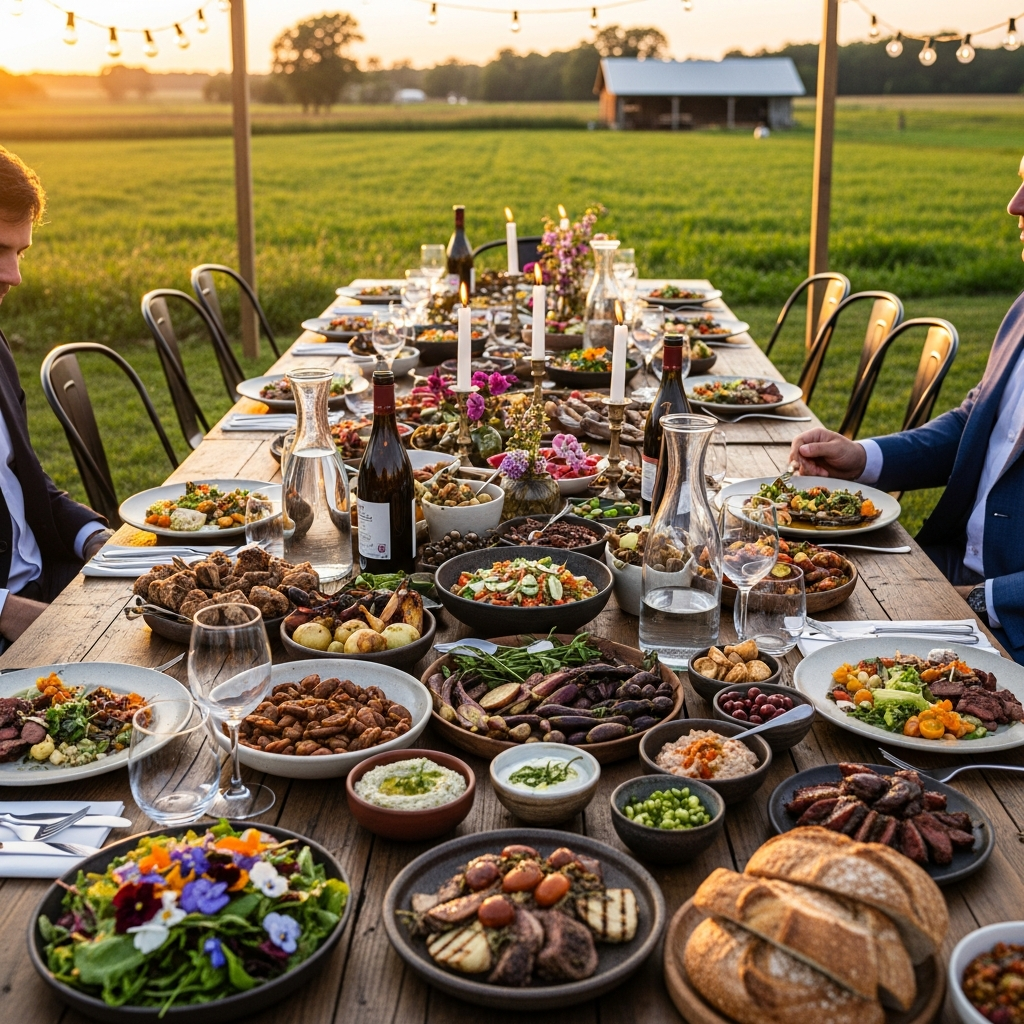
Farm-to-table luxury dining has evolved from a grassroots movement into a dominant lifestyle choice for 2026, with discerning diners demanding complete transparency about ingredient origins, environmental impact, and the stories behind every dish. This transformation reflects a broader shift where high-income food enthusiasts willingly pay premium prices for seasonal produce harvested mere hours before service, supporting local economies while experiencing unprecedented levels of culinary craftsmanship and sustainability.
Key Takeaways
- Local sourcing ranks as the top culinary trend according to the National Restaurant Association’s 2026 Culinary Forecast, with billions of dollars retained in communities through farm-to-table practices.
- Zero-waste kitchens and compostable packaging have become non-negotiable standards, with AI technology predicting demand to minimize food waste across luxury establishments.
- Prix-fixe concepts like Sirrah’s $75 menu and Medium Rare’s $35 steak frites offer affordable luxury, providing high-end value meals with controlled costs and known spending.
- Fermented and functional foods dominate menu innovations, appealing to wellness-focused diners seeking both flavor complexity and health benefits.
- Technology and tradition converge in 2026, with blockchain verification and mobile apps enhancing transparency while preserving personal farmer narratives.
Farm-to-Table Luxury Dining: The Dominant 2026 Lifestyle
Farm-to-table luxury dining now emphasizes freshness, craftsmanship, sustainability, and transparency as foundational pillars rather than optional extras. What began as a niche movement has transformed into mainstream demand, with consumers insisting on origin tracking and environmental impact details for every ingredient on their plates. High-income earners drive this shift, demonstrating their willingness to pay premiums for seasonal produce harvested hours before serving.
The economic impact proves substantial. Billions of dollars remain in local communities through this dining model, supporting regional farmers and artisan producers who supply restaurants with nutrient-dense, varietal-diverse ingredients like kalettes instead of standard kale. The restaurant industry, comprising over 1 million outlets and 15.7 million employees, has widely adopted these practices. According to the National Restaurant Association’s 2026 Culinary Forecast, local sourcing ranks as a top trend, deepening community ties through relationships with nearby farms.
Traditional chain dining lacks the trust and authenticity that farm-to-table establishments provide through personal farmer narratives. Technology enables this transparency through digital menus with farm tracking capabilities, allowing diners to see exactly where their heirloom vegetables or artisan cheeses originated. Despite higher prices stemming from labor-intensive organic farming practices, 2026 logistics have stabilized costs, making the model economically viable for restaurants and consumers alike.
The reduced carbon footprint from shortened supply chains adds environmental value to the culinary experience. Farm-to-table luxury ingredients now represent more than taste—they embody a commitment to sustainable food systems that benefit producers, consumers, and the planet simultaneously. This alignment of values with dining choices has cemented farm-to-table as the preferred model for discerning food lovers.
What Makes Farm-to-Table Truly Luxurious in 2026
Luxury in farm-to-table 2.0 prioritizes quality over quantity, with intentional sourcing of ethical seafood, sustainable proteins, and ingredients rooted in Indigenous farming traditions. Chefs cultivate personal relationships with regional growers, visiting farms to understand cultivation methods and selecting varieties based on flavor profiles rather than appearance or shelf life. Many establishments have added rooftop gardens for microgreens and herbs, bringing production literally overhead.
Indigenous farming traditions like milpas—the corn-squash-bean intercropping system—inspire menu development, as do heirloom beans prized for their superior flavor and sustainability credentials. These ancient agricultural practices offer modern solutions to environmental challenges while delivering exceptional taste. Chef Joe Muscarello in Scottsdale exemplifies this approach, sourcing heirloom vegetables and artisan cheeses from local producers to create distinctive regional menus.
Zero-waste kitchens have become non-negotiable in luxury establishments, with compostable packaging standard across the industry. AI technology predicts demand patterns to cut waste dramatically, while profit margins actually improve through efficiency gains among sustainability leaders. The 2026 landscape features blockchain verification of sourcing claims and mobile apps that display real-time farmer availability, ensuring transparency matches the premium pricing.
Premium pricing justification reflects the true costs of small-scale farming’s labor intensity compared to industrial agriculture. Diners pay for the emotional narrative behind the plate—knowing the farmer who raised their protein or grew their vegetables. This personal connection transforms meals into experiences, distinguishing luxury farm-to-table from conventional upscale dining.
The shift from white tablecloths to intimate hybrid dining experiences reflects changing preferences, with chef-curated pre-pay models gaining popularity. Fast casual concepts decline while upscale casual rises, offering approachable luxury that feels less formal yet maintains high standards. This evolution demonstrates how luxury adapts to contemporary values around authenticity and transparency.
Must-Visit Farm-to-Table Luxury Restaurants
Several establishments exemplify the farm-to-table luxury model across diverse price points and locations. These restaurants blend exceptional sourcing with compelling value propositions, making premium dining accessible to broader audiences through strategic menu design:
| Restaurant | Location | Signature Offering | Price Point |
|---|---|---|---|
| Sirrah | New York, NY | Prix-fixe with amuse bouche, bread, salad, entree (steak/fish/vegetarian), and frites | $75 |
| Trestle | San Francisco, CA | Prix-fixe only from Hi Neighbor Hospitality | Varies |
| Medium Rare | 9 locations (Texas/East Coast) | Steak frites with free seconds | $35 |
Sirrah in New York offers a comprehensive $75 prix-fixe experience that includes multiple courses, delivering luxury dining at a predictable price point. This format eliminates surprise costs while ensuring ingredient quality matches upscale expectations. Similarly, luxury dining experiences worldwide increasingly adopt this model for transparency and value.
Trestle in San Francisco operates on a prix-fixe-only concept through Hi Neighbor Hospitality, demonstrating how format restrictions can enhance rather than limit the dining experience. Removing à la carte options allows chefs to focus on perfecting seasonal menus that change based on farm availability. This approach maximizes ingredient freshness while minimizing waste.
Medium Rare’s nine locations across Texas and the East Coast prove that farm-to-table luxury can scale without losing integrity. Their $35 steak frites with free seconds offers remarkable value, making premium ingredients accessible to diners beyond the ultra-wealthy. This democratization of quality represents a significant 2026 trend toward affordable luxury tasting menus.
Chef Joe Muscarello’s Scottsdale operations showcase regional farm-to-table excellence, sourcing heirloom vegetables and artisan cheeses from local producers. His approach demonstrates how geographic specificity enhances authenticity, with menus reflecting the agricultural strengths of their immediate surroundings rather than importing ingredients from distant locations.
Emerging trends include hybrid revenue models where restaurants offer farm boxes for home delivery, extending their sourcing relationships beyond on-premise dining. This diversification supports consistent farmer partnerships while generating additional income streams that stabilize operations during slower periods.
Menu Innovations and Pairing Trends
Farm-to-table menus in 2026 integrate fermented and functional foods like kimchi, sourdough, and kombucha for both flavor complexity and wellness benefits. These preparations showcase agricultural bounty while adding probiotic value that health-conscious diners actively seek. Fermentation transforms simple vegetables into sophisticated accompaniments that elevate entire dishes.
Plant-based gourmet options have evolved beyond basic vegetarian plates to include creative preparations like smoked carrot “ribs” and jackfruit tacos that appeal to flexitarians. These dishes aren’t relegated to separate sections but integrated throughout menus as compelling choices for all diners. The craftsmanship involved in developing plant-based proteins that satisfy carnivores demonstrates culinary innovation at its finest.
Comparing fermented to standard preparations reveals significant health benefits, including improved digestion and nutrient absorption. Plant-based proteins serve as add-ons rather than replacements, allowing diners to customize meals according to dietary preferences without feeling restricted. This flexibility aligns with comfort and value priorities that top 2026 forecasts according to industry research.
Ethical seafood and sustainable meats dominate protein selections, with sourcing stories prominently featured on menus. Cleaner recipes with fewer additives reflect consumer demand for transparency extending beyond ingredients to preparation methods. Chefs emphasize large soul-satisfying plates over small plates, providing better value perception and more substantial dining experiences.
The shift toward upscale casual with intimate hybrid dining experiences influences menu structure and presentation. Diners want approachable luxury that doesn’t require formal attire or stuffy service protocols. Much like gourmet dining in Dubai, modern farm-to-table establishments balance sophistication with accessibility, creating environments where exceptional food takes precedence over pretension.
Pairing trends emphasize local beverages—craft beers, regional wines, and artisan cocktails featuring farm-fresh herbs and fruits. These combinations extend the farm-to-table philosophy beyond food to encompass entire beverage programs. Complete sourcing transparency across all menu elements becomes the standard expectation rather than a differentiating feature.
The Economic Impact and Future of Farm-to-Table Luxury
High-end diners pay premiums that reflect true agricultural costs, with restaurants maintaining healthy margins through transparent communication about pricing rationale. Expansion occurs through farm boxes and mobile apps that extend customer relationships beyond dining room visits. Industry pressures like elevated operational costs push disciplined growth that preserves local spirit rather than pursuing aggressive scaling.
The billions of dollars retained in local economies through farm-to-table practices support entire communities of producers, processors, and distributors. This economic model sustains the 15.7 million-person workforce across over 1 million restaurant outlets that have adopted these practices. Carbon footprint reduction adds environmental value that increasingly factors into consumer decision-making.
Prix-fixe value propositions control costs for restaurants and diners simultaneously, with known spending amounts eliminating budget anxiety that can diminish dining enjoyment. Hybrid revenue models combining on-premise dining with retail products and meal kits diversify income streams, stabilizing businesses against seasonal fluctuations or economic uncertainties.
Comfort and value top 2026 forecasts, with local sourcing ensuring authenticity that diners can verify through personal connections and transparent supply chains. The convergence of sustainability, technology, and authentic experiences defines this era, with innovations enhancing rather than replacing human hospitality. Similar to Michelin-star dining experiences, farm-to-table establishments balance technical excellence with emotional resonance.
Technology like blockchain verification and AI demand prediction serves the personal farmer narrative rather than obscuring it. Mobile apps display real-time availability, connecting diners directly to agricultural realities that influence menu composition. This balanced innovation approach preserves the intimacy and authenticity that attract diners to farm-to-table concepts initially.
Future growth will likely emphasize geographic expansion of successful models like Medium Rare’s multi-location approach, proving that farm-to-table principles can scale with careful attention to local sourcing in each market. Affordable luxury tasting menus will continue democratizing access to premium ingredients, broadening the customer base beyond ultra-wealthy diners to include middle-class food enthusiasts who prioritize quality.
The 2026 landscape represents maturation rather than revolution, with farm-to-table luxury dining firmly established as the preferred model for discerning food lovers. Continued refinement of sourcing relationships, menu innovation, and technology integration will enhance experiences while maintaining the core values of transparency, sustainability, and community support that define this culinary movement.
Sources:
National Restaurant Association – 2026 Culinary Forecast
*This article was thoughtfully created with help from Perplexity and Claude for research and drafting then carefully reviewed and edited by a person to ensure it’s accurate and helpful. Some links are affiliate links, which means we may earn a small commission—at no extra cost to you—if you choose to make a purchase.*




2 Comments on “Best Farm-to-Table Luxury Dining Experiences Around the World for Food Lovers in 2026”